Bureaucracy enables envy, envy begets bureaucracy

Bureaucracy enables envy, envy begets bureaucracy

The classic explanation of growing bureaucracy inside an organization is that the people who benefit from the processes (i.e., bureaucrats) have an interest in perpetuating the growth.

This is probably true, incentives are superpowers and all that. I’d like to add an often neglected point to the discussion: people who don’t benefit — who hate the bureaucratic processes — also push for more bureaucracy.

Here’s an analogy.

During the 2008 housing crisis, many Americans were furious that their neighbors might receive mortgage relief they themselves didn’t get. This resentment helped fuel the Tea Party movement. The same psychology applies elsewhere: “I had to work hard, why should others get UBI?” Or: “I suffered through a brutal exam, so future lawyers should too.” And it applies to bureaucratic processes too.

Being denied something by bureaucracy creates a kind of mini trauma, one that resurfaces when people see others slipping through gaps the bureaucracy hasn’t yet reached. The people then pressure the powers that be to close the gap, to formalize the exception, to make others suffer the same process.

Of course, there are legitimate reasons to formalize things. But we should also admit that ‘this isn’t fair to the group’ often masks ‘this isn’t fair to me’.

Against auto-update

Against auto-update

People flip out over rearranged or occupied desks at work. Someone moved their stapler, shifted their monitor, took their place, and suddenly it’s a whole thing. I, personally, can handle an occupied or rearranged desk. I flip out over rearranged apps.

Software usually comes with the “automatic update” setting on by default. You probably know what I’m going to advocate for. In my opinion, this setting should almost always be turned off.

Reasons against auto-update:

  • I don’t know what changed. The “here’s what’s new” popup appears when I open the app to do something, so I immediately click the popup away. I’m more likely to actually read what’s different when I consciously update.
  • Many new changes aren’t really beneficial, sometimes software just gets strictly worse and your muscle memory becomes a liability.
  • Downgrading is hard, sometimes impossible — iOS for example won’t let you go back.

Of course, everything is a trade-off. One reason web applications are popular is because they basically force every user to auto-update.

Reasons for auto-update:

  • Security updates
  • The “app version not supported” screen is annoying and you might be forced to update at an inconvenient time

The security argument is strong, however, software providers pivoted to either using a different update channel for critical security fixes or they stop supporting vulnerable apps outright, which is sane behavior. In that sense, the “app version not supported” banner might be a good thing, heh.

The tradeoff is worth it in my eyes. Since turning auto-update off, I have more calm about my frequently-used apps and I don’t flip out about someone rearranging my apps.

Related

Timeboxd

Timeboxd

We fetishize time, let’s put it in a nice dress

Getting more done with less is knowing which tasks to delegate (to AI) and which tasks not to do at all. In other words, extreme clarity on the stuff you ought to do, and extreme focus while doing it. The most fundamental way I achieve clarity is by typing down everything, literally everything I do and think about. That’s a story for a longer post. This post isn’t about my typing tips; it’s a tribute to the timebox. And the focus you can achieve with ~dot~ it.

The gist of timeboxing is that you define a task time and set aside a limited amount of time to solve it. Here lies the first benefit of the timebox: actually thinking through what you want to do right now, and how long it should take. Just scribbling down things on the task at hand gets you much closer to working tidy. There are many posts and theories about maximum timebox efficiency, but I keep it lightweight.

I use Session as my timeboxing app of choice1. Mostly because when the timer for the timebox starts, there’s a delightful animation to guide your breath:

I just stare at the dot and breathe, in and out. I always go back to the dot. Don’t want to work? Go back to the dot. Stressed? Go back to the dot. Dot.

Wouldn’t you know, staring at dot is a quintessential meditative and concentration practice. My tip: while breathing in, suck in the upper part of your stomach. It automatically becomes a meditation practice and fixes your posture.

The dot clears the noise so you can actually attune.

After dotting around, I start defining the task. The first timebox timer is for always 5 minutes long in which I fill out the following text form:.

- What should I be doing now?
  - 🔵
- goal@🔵
- async task: 🔵

(hint: "🔵" is my way of marking text snippets as "to fill out")

The generation of the text form is automated. The filling out is not. Basically, I view it as a Socratic monologue with myself about what is currently the highest priority. Like, not what I think is the highest priority, but what actually is the highest priority. Small tasks like replying to messages are done instantly. The highest priority task crystallizes through asking and answering abstract questions, like “is there a better way to do this?”.

Having found the task, I timebox it, like goal@8:30 - ship article. The async task field forces me to think about if I can use AI agents to aid me with the task, like doing research in parallel.

Here’s a filled out example from this morning:

- What should I be doing now?
  - Mhh, ship article? Or work on the app?
    - The app can wait, article is more important as I want to write everyday
  - Is there a more important task right now?
    - Nope, ship article
- goal@8:30 - ship article
- async task: Claude deep research breathing techniques

Usually I start working on the task before the 5 minutes are up. Then the 5 minute timer pops, I set the actual timebox for the defined goal, and keep going. When the timer runs out I take a break. The actual evaluation and reevaluation of the work happens after staring at the dot. Rinse and repeat.

I follow this order religiously: breathe first, then decide what to do, then timebox. When the timer dings, I stop. When I don’t follow the timebox and the dot, I have my least productive days. Most online productivity articles impose too much structure for my taste. My workflow is optimized for me, but the steps flow into each other naturally. No predefining of timeboxes and tasks.

Just asking what I should be doing, how long it should take, and what I can skip entirely. Over and over and over and over.

fin

dot
The vasocomputational model for meditation

The vasocomputational model for meditation

see quote below for description

You could see meditation as mental stretching: standard intellectual skills are like training for grip strength, you get better at grasping concepts, but worse at letting them go

This is not just a metaphor, according to @johnsonmxe’s theory of vasocomputation, we freeze neural patterns (concepts) by constricting the smooth muscles of our blood vessels (grip), we are literally grasping concepts with tiny muscles, and if we don’t stretch and move enough, we lose flexibility and agility, same as with the musculoskeletal system

...

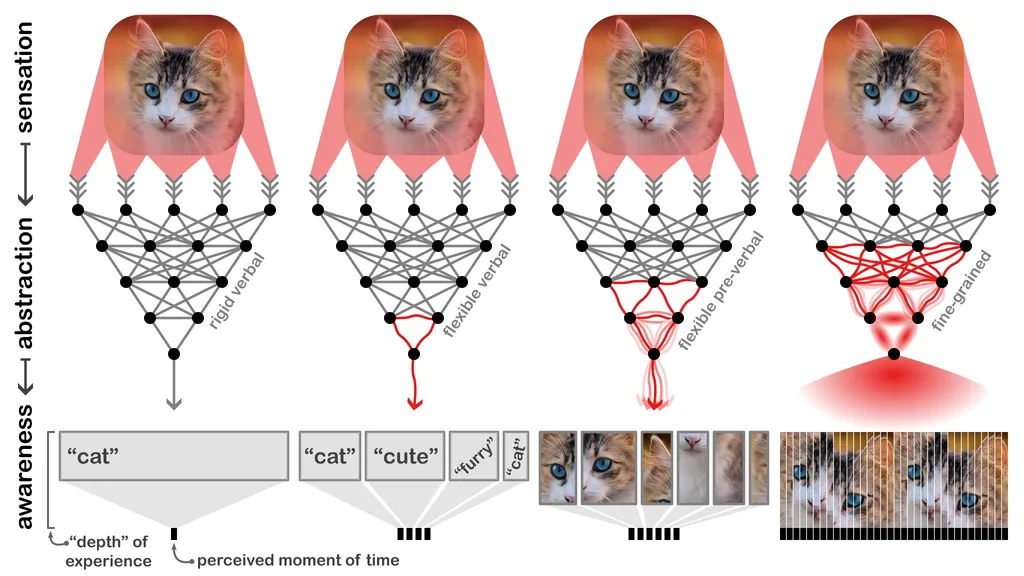
I’ve tried to illustrate the stretching/relaxation process in the diagram [above]:

  • The picture of the cat at the top represents input from our sensory system
  • The triangular network represents our neurovascular system filtering that input so we can fit it into conscious awareness, it’s a dynamic information filter
  • As blood vessels progressively release their grip on neural patterns (left to right), awareness becomes more dynamic and gets more information from deeper (less abstract) layers of the network
  • At the bottom I’ve tried to show the qualitative effects of this: experience feels deeper and richer (indicated by the height of the chunks of perception) and time appears to expand (we can only perceive time by observing change, so a more dynamic awareness creates more distinct “moments” in time)

~ Hinterlander

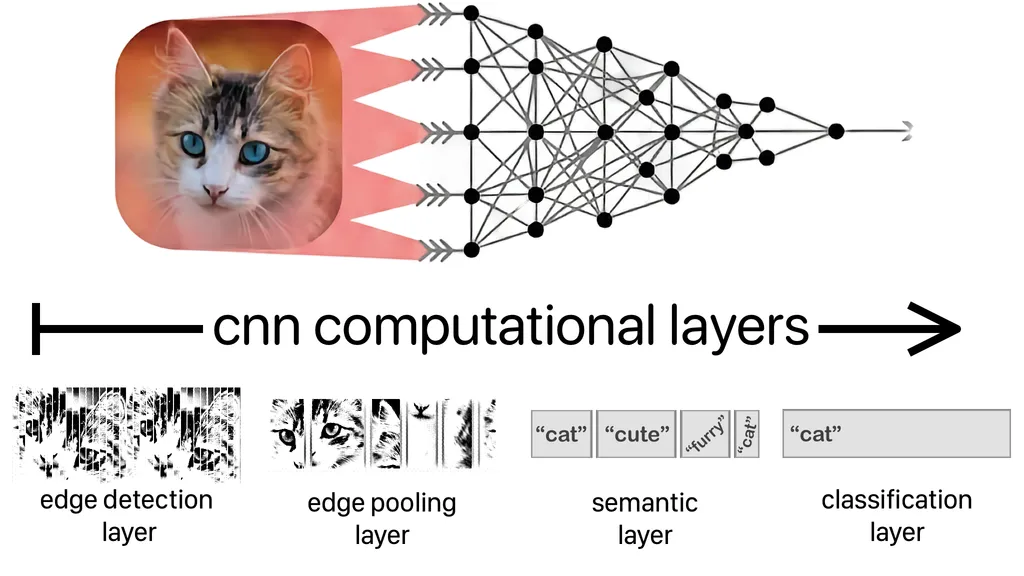
A useful model of combining common experience, psychedelic experience, and insights from deep neural networks. In fact, it’s crazy how much the [above] diagram reminds me of the 101 explainer of how deep convolutional neural networks (CNNs) work:

Yes, my dear reader, you noticed something -- convolutional neural networks do vasocomputation as well! Or rather, in the vasocomputation model, we “stretch” the natural neural network, our brain, to be aware of earlier stages of our information processing.

Is this finding genuine consilience? Anyway, as with any model, the goal is to create better questions and models, not to arrive at an answer.

Munger and Godbolt rules for explaining the world

Munger and Godbolt rules for explaining the world

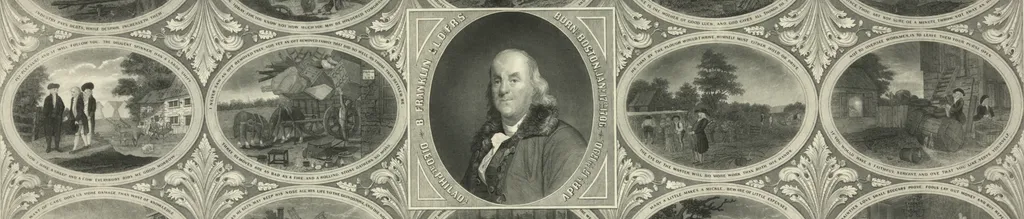
a cropped version of poor richard almanacks illustrated, an illustrated version of benjamin frankling

You can never make any explanation that can be made in a more fundamental way in any other way than the most fundamental way. ... You’ve got to know all the big ideas in all the disciplines more fundamental than your own

~ Charlie Munger, Poor Charlie’s Almanack book

In the book, Charlie uses insights from psychology to explain how one casino slot machine can be made more popular: you leave the “misses” rate fixed, but increase the amount of “near misses” of the slot machines. “Ah, just a single cherry was missing for the jackpot” and so on. Crude microeconomic models would predict all slot machines to have the same popularity, as all slot machines have the same amount of “misses”, therefore the same expected economic value. Charlie, however, considers psychology to be more fundamental than microeconomics.

Munger’s rule has explanatory power bottom up - start from the fundamental disciplines and build up. In complex systems such as software, a different rule might have better explanatory power. Program code is built like a cake with layer upon layer upon layer of abstractions and concepts. The problem to be solved or explained is not always at the most fundamental layer. In these cases, it can make sense to purchase explanatory power by working top-down:

You should know your layer well, but you should also know one layer below it a little bit, and you definitely need to know the shape of the layer that’s beneath that.

~ Godbolt’s rule

In defense of autism

In defense of autism

It is hardly possible to overrate the value, in the present low state of human improvement, of placing human beings in contact with persons dissimilar to themselves, and with modes of thought and action unlike those with which they are familiar.

~ John Stuart Mill

Autistic people are easily accused of lacking empathy, and in some deeper, indirect ways, lacking humanity. Really, few online peeps bother demonstrating empathy and gratitude themselves. When thinking about autism, I try to keep one thing front and center:

  • Autistic people are humans, deserving of dignity

Other considerations when thinking about autism1:

  • Autistic people are treated as outsiders, making them less likely to believe society’s stories around race, nationality, etc.
  • Autistic people are killing it in our most innovative sectors
  • Autistic people are underdog scientists, more likely to follow low-status, high-impact ideas
  • Because LLMs are literal and information-dense, autistic people are better at steering AI
  • Autistic people are the creators of my favorite tools

Hard for me to not have gratitude for the autistic community.

Related:


Footnotes:

  1. With the caveat that you should read “autistic people are” as “autistic people are statistically more prone to be” ↩

A simple definition of simple

A simple definition of simple

My life changed when I learned what simple really means. Simple comes from simplex. The opposite of complex. Complex comes from complex, the verb that means to intertwine.

This is important. Remember this, dear listener, your life is complex when it is intertwined with dependencies. You are depending on things and things are depending on you. Your life is simple when it is not complex.

~ Derek Sivers

Related

Assumptions in apps

Assumptions in apps

Let me decide what’s best for me

I

Screenshot of Apple Podcasts \"Browse\" section showing two promotional banners: \"2025 IN REVIEW\" and \"BEST OF 2025\" with colorful starburst and bar chart graphics. The interface suggests a curated year-end selection of top podcasts.

Oh, best podcasts of 2025 list in my Apple Podcasts app? Great! Let’s see if I can find some great new things from the vast world of podcasts.

Screenshot of the Apple Podcasts \"Best of 2025\" page revealing Apple's editorial picks. Notably, all eight featured podcasts are German language shows, including \"Die Peter Thiel Story,\" \"Was Bisher Geschah,\" \"Firewall\" (Der Spiegel), and \"God Code: Macht. KI. Drama.\" Despite being a global platform's \"best of\" list, the entire selection consists exclusively of German content across categories like True Crime, History, Comedy, and Documentary.

Oh, they are all from Germany!

The idealist and cosmopolite I am, I expected podcasts from all around the world under the “best podcasts” section. At least English speaking podcasts, given the English title of the campaign.

Of course, when I’ve originally opened my App Store account, I’ve set the region to Germany and that’s why Apple shows me German podcasts. I don’t live in Germany anymore. Even worse in some sense, I am not listening to German-speaking podcasts at all.

II

Starting in late 2024, I noticed ChatGPT and Claude subtly changed their behaviors. I had a hunch they knew the physical location I am prompting from. This hunch turned out to be true.

I consider the steering of LLMs the most crucial skill for white-collar workers. Providing information, or rather, assumptions automatically to the LLM is like a backseat driver who grabs the steering wheel and yanks it left, assuming you wanted to turn that way.

Okay, I might’ve gone too far with the analogy there. Though, the fact that I could feel a vibe shift in the answers I got is enough reason for me to be ticked off by this.

I am aware that 2025 LLMs have a slight American and liberal bent by default. I consider this a feature, not a bug. Knowing the default behavior, its vanilla vibe, is a crucial part effective coworking with LLMs.

III

ChatGPT and Claude have a “memory” feature, which automatically provides the LLM information from previous chats. This feature also changes the vibe of the answers you get back. I have no qualms with the feature though, as you can just turn it off, to get back to the default behavior.

Underrated reasons to be grateful: podcasts

Underrated reasons to be grateful: podcasts

  1. That “subscribe wherever you get your podcasts” is a miracle
  2. That, because Plato was: fuckin jacked, a MMA commentator, taking psychedelics, into stoner theories and learning by asking questions, it means the most popular podcast host is closer to Plato than we appreciate
  3. That looks matter less
  4. That while people play status games about what they read and watch, few people play status games about which podcasts they listen to
  5. That the popularity of non-dubbed American podcasts are incentivizing more people to learn English, pushing humans closer to one universal human language
  6. That Bill Burr’s Shari’s Berries moment exists
  7. That if it’s true that speech is what really set mankind apart, then it is likely that podcasts might be Homo sapiens most unique art form
  8. That podcasts are an art form, and that both highly produced podcasts and lofi podcasts are listened to in equal measure
  9. That podcasts and their respective audience comments are hard to find, we are less captured by groupthink around podcasts
  10. That it’s truly keeping oral culture alive
  11. That podcast interviews are distinctively different from radio interviews, as radio hosts are more likely to try to make their guest appear dumb, while podcast hosts are more likely to try to make their guest appear smart
  12. That we have a more authentic conversation medium than TV and radio
  13. That it proved the world that Mike Tyson is truly the warrior philosopher of our time, he would’ve killed it in the Roman Empire

Inspired by Thanksgiving and Dynomight.

Sigal Samuel on Indra's net

Sigal Samuel on Indra's net

an illustration depicting indras net by pete gamlen, a net of jewels with a carved out humand shape in the net, driving the metaphor of boundary setting home.

Sigal Samuel making some great observations about boundary setting culture:

... some people bastardize the concept of boundaries by brandishing boundary language as a cover for avoidance. We’ve all got that friend (or Instagram influencer) who says, “Nope, I’m drawing a boundary!” anytime they’re being asked to do something that would be even a little hard or uncomfortable.

This likely occurs when a person hasn’t set their boundaries once, and has been burned for that mistake. Now it’s become a mini avoidance response, it’s easy to overindex on mistakes by overly correcting behaviour.

So allow me to present Indra’s net, a classic Buddhist metaphor that originated in ancient India.

Picture an infinite net stretching out across the universe (a bit like a spiderweb). At each node where the threads intersect, there’s a jewel (a bit like a dewdrop that sits on the spiderweb). And each jewel is so shiny and reflective that it contains the image of every other jewel in the entire net. Which means each jewel also contains the reflections of the reflections, and the reflections of those reflections, on and on forever.

Sigal goes deeper into the metaphor, focusing on the fact that we are dependent on each others lights and reflections:

Feeling fear and resentment while offering “charity” or “service” or “help” to others is not actually being in right relation with others — it’s an all-too-common form of martyrdom that sets up a hierarchical dynamic between a long-suffering “giver” and a passive “receiver.” The alternative is to stay horizontal, to think “I’m a jewel in the net, you’re a jewel in the net, and I’ll offer whatever I can offer without damaging my well-being — without ripping my part of the net.”

So, dear reader, play with finding that balance. You’ll know you’ve found it when you don’t feel resentful — you just feel tightly connected to others, and gleaming.

Original Vox advice column here, archived version here.

I believe deeply that people can improve their wellbeing. Usually not with strict systems or elaborate frameworks, but rather a dance and confrontation with reality.

Related:

Ruminating on read receipts

Ruminating on read receipts

Why the two ticks mean so much

One obsession of mine is tracking which communication styles only work when texting, and which ones only work face-to-face. One obvious difference is expected responsiveness: texting is inherently asynchronous. There are many settings which you can tune on your texting app of choice1. Out of all the settings, I will argue that having read receipts on or off is the most impactful decision for your social life.

I have always left read receipts on and I have always responded to texts instantly. This is a conscious decision, I believe your personality shines through the most when you don’t overthink your messages. If I want to date the person I am texting with, I lean into this more, to signal who I am and that I am not playing communication games. Establishing this trust in your texting style and personality benefits everyone who texts you in the long run. I’ve noticed the most unresponsive people usually have read receipts off. My friends know I am responsive.

I can see the case for turning read receipts off, though. People like the freedom to read a message and respond at a time that fits them. It can also be a status and image thing, people might want to be considered busy2. Privacy considerations are similar to the freedom argument, but might be rooted in difficult circumstances the person finds themselves in, like texting with mentally ill people. Basically, these are all arguments for people reading something and not responding, which is why read receipts have a bigger effect on the person reading than the person sending.

Except in psychopath ex or dysfunctional family circumstances, I believe turning off read receipts does a person more harm than good. Or said differently, you can improve your personality by just turning read receipts on. You free yourself from what I like to call the “plausible deniability lifestyle”. You can see this lifestyle everywhere, delivery drivers eating some of your ordered fries, masking passive aggressive comments, reading a message but not sending read receipts. You probably caught on, my point is not about fries or read receipts. It’s about how many tiny ways we’ve found to avoid being fully honest, fully present, or fully accountable. The simple act of turning read receipts on and responding instantly is a big rebellion against all the mini-rebellions of plausible deniability. Fully engage with life, leave your read receipts on.

The allure and failure of knowledge graphs

The allure and failure of knowledge graphs

tweet by hamal husain \"></a> sees new RAG is dead blog post and opens it (shame on me) > see the word knowledge graph > promptly close the post\"

Knowledge graphs are one of the sexiest sounding methods in theory. Scientist and engineer types are attracted to codifying knowledge in an abstract, syntactically perfect way. The history is full of big projects trying to bridge the gap between the perfectly syntactic knowledge graph world and the mushy semantic world. They all failed so far.

The newest revival of knowledge graphism is combining the knowledge graphs with LLMs. Go through the comments, people are again attracted by the idea of abstracted, perfected knowledge. I believe this concept finds resonance because interacting with LLMs is inherently mushy.

However, modern LLMs should be seen as more efficient knowledge graphs (efficient in the economic sense of the word1). LLMs with agentic capabilities are even more efficient! LLM results are not as satisfying as syntactically and deterministically querying a knowledge graph, however.

The biggest knowledge graph user, Google, is pivoting to enhancing their results with AI Overviews. Funnily enough, Google itself is sneak dissing the usefulness of knowledge graphs in the linked PR statement:

We’ve meticulously honed our core information quality systems to help you find the best of what’s on the web. And we’ve built a knowledge base of billions of facts about people, places and things — all so you can get information you can trust in the blink of an eye.

Now, with generative AI, Search can do more than you ever imagined. So you can ask whatever’s on your mind or whatever you need to get done — from researching to planning to brainstorming — and Google will take care of the legwork.

People love to post examples of bad AI Overviews, but whenever I look over the shoulder of my friends, most of their Google queries are answered by the AI Overviews section.

I believe knowledge graphs work best when you can codify your knowledge as honest-to-god facts. Facts that have the least possible amount of interpretation potential, the least amount of semantics.

LLMs just capture semantics better, or worded differently, capture the context of the query better. As dissatisfying as the realization is, the real world is mushy and big, and thus can currently only be captured by mushy and big models.

Related ideas:

The case for preserving case

The case for preserving case

A short story of going against your elders, while being accepting of their ways

a screenshot of dropping a file 'draft.docx' into a directory already containing the file 'DRAFT.docx' What happens when you try to drag-n-drop the draft.docx into a directory containing a DRAFT.docx file in macOS?

macOs alert saying: An item named \"DRAFT.docx\" already exists in this location. Do you want to replace it with the one you're moving?

You get an alert!

This is because macOS is case-insensitive, it considers draft.docx and DRAFT.docx to be the same filename. It’s all lowercase in the eyes of my MacBook. Also in the eyes of most humans, it’s easy to follow why you don’t want to allow draft.docx and DRAFT.docx to be in the same directory.

Treating everything as lowercase is efficient because it simplifies many, many, computer operations1. However, case contains information, and we don’t want to lose that information, we all know the difference between draft_final.docx and FINAL_draft_final.docx. The good news here is that macOS is also case-preserving, meaning you can have your FINAL cake and eat it too!

Because computer programmers are binary thinkers, many systems are not designed this way. Most case-insensitive file systems are not case-preserving, and most case-preserving systems are case-sensitive. The legendary UNIX system - the ancestral grandparent of macOS - for example, differentiates between draft.docx and DRAFT.docx, and allows both files to be in the same directory2. macOS inherited the UNIX differentiation between draft.docx and DRAFT.docx in terms of displayed filename, but is wise enough to simplify by treating the names as equal for actual operations. The best behaviour in my eyes.

Like in many other design decisions, macOS hits the sweet spot of “intuitive but opinionated”, while still being accepting and preserving other kinds of workflows. We should all be more like macOS, opinionated, but preserving original meaning.


Footnotes:

  1. That’s one meta-reason I write in all lowercase as well, I differentiate less, leading me to type faster, type more ↩
  2. See Wikipedia ↩

My personal, stubborn attachments

My personal, stubborn attachments

book cover of stubborn attachments book, a picture of the planet earth pinched between index and thumb

I

Tyler Cowen’s book Stubborn Attachments lays out “a vision for a society of free, prosperous, and responsible individuals”.

The book makes surprisingly simple claims: you can achieve prosperity for the whole world if you are stubbornly attached to two principles:

  • Economic growth
  • Basic human rights

As I said, this sounds simple to the point of it being redundant right? Almost no one argues for the opposite, so why even argue for these principles? But Tyler doubles down on these stubborn attachments in the book, hammering the point home that economic growth is the moral imperative. Everything worthwhile is downstream and emerging from economic growth. It’s imperative because economic growth inevitably leads to a better world, or growth is our best shot at a better world. A world where wellbeing is improved for everyone, no matter how you want to measure wellbeing.

The points he makes in the book are plentiful, philosophical and practical. A short read, I’d recommend it to everyone - especially the content around the book, like Tyler Cowen himself dismantling the arguments of the book.

II

The kind of growth I am interested in is personal growth. Being keen to religious reasoning, I consider personal growth a moral imperative. Inspired by Tyler Cowen, the question becomes: how can I formulate my stubborn attachments so that personal prosperity becomes inevitable? Of course, I could simply have two bullet point list as well, like “personal growth” and “mood maintenance”. But that’s boring.

Not being bound by having to define a set of principles for the entire world, let me be specific about my personal stubborn attachments:

  • Go to sleep early
  • Ship something creative everyday
  • Rewrite something every day
  • Write out the question and answer to “what should I be doing right now” constantly
  • Never make something you tell the world become a lie
  • Whenever you think well of someone, immediately tell them (whether through text or thanks, never in thoughts)
  • Don’t take any form of drugs1
  • Never wish for less time
  • When falling short, simply atone for your mistakes by being stubbornly attached again

III

While the book’s arguments are made through a secular and global lens, the underlying theme of the arguments are religious and American. In fact, Tyler Cowen’s own Straussian reading2 of the book is a defense of Mormonism and American exceptionalism: the optimism baked into the book, the faith in compounding growth, that the future will be better than the past, that actions matter in cosmological timescales. Fittingly, Tyler considers Mormonism the most American religion.

What are your secularly-defined-but-actually-borderline-religious attachments?

Don't make me wait

Don't make me wait

It’s 2025, after signing up for an app or website with your e-mail address, you wait to receive the “verify your account” message in your e-mail inbox. You keep refreshing your inbox, the message arrives about two minutes later. Why is this not instant?

An easy case to make for why it should be instant comes from the world of e-commerce. We know that even milliseconds of delay in your software lower customer retention and satisfaction, thus lowering company revenue. What makes the waiting-for-confirmation-mail problem even weirder is the fact that software companies invest heavily in generating new user sign-ups.

Okay, I want to make a second point, not from the world of e-commerce, but from the world of ancient, old school commerce: banking. Banks understand that the most valuable customer behavior (opening a new account) deserves massive optimization, even when it seems inefficient:

Banks have extremely weird behaviors by the standards of parking engineers; the typical user behavior is to stop in for only a few minutes but the behavior the bank wants to optimize for, new account opening, can take half an hour to several hours. Through what turns out to be a simple result of queuing theory, bank branches end up with a lot of parking that appears mostly underutilized almost all of the time, and this is close to optimal.

Excerpt from the excellent patio11 article.

Okay, I hope to have made my case of why it should be instant. Now the question remains why clearly companies don’t care about making it instant. I remember back in 2005, 20 years ago, being annoyed by this. Maybe it is like daylight saving time? Everyone hates the thing, and clearly we should do better here, but since it’s a once and done thing people don’t complain long enough for the problem to be fixed? Maybe we rely on the “stay signed in” button too much? I don’t know. Anyway, to all people designing an e-mail confirmation service, please speed it up. Don’t make me wait.