gratitude haiku
gratitude haiku
the cold shower slams
a bolt, then a tingling calm
my lungs full of thanks
the cold shower slams
a bolt, then a tingling calm
my lungs full of thanks
I regret my behaviour in a relationship if I don’t integrate all these aspects.
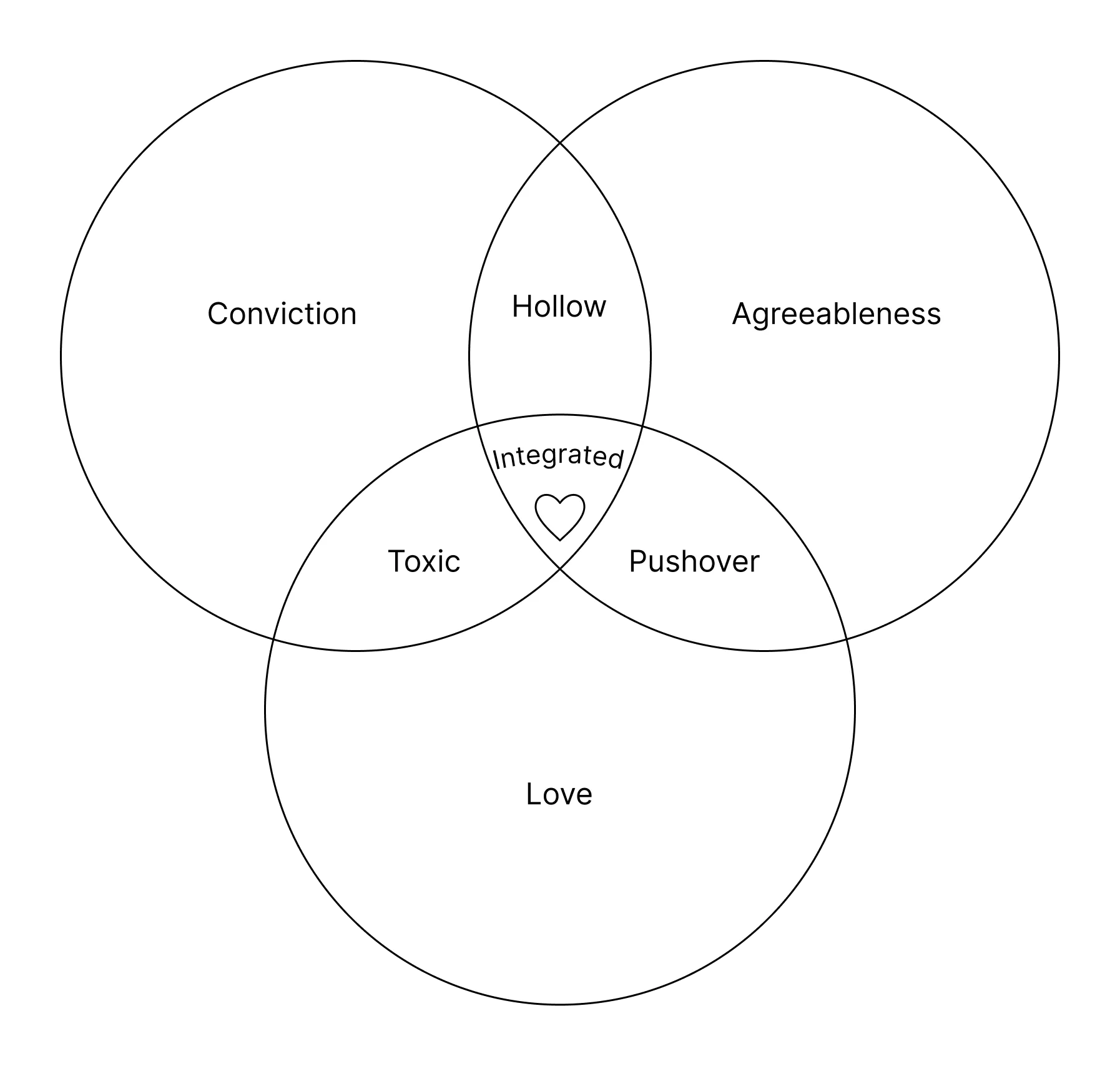
Importantly, relationships should evolve out of this single-person diagram.
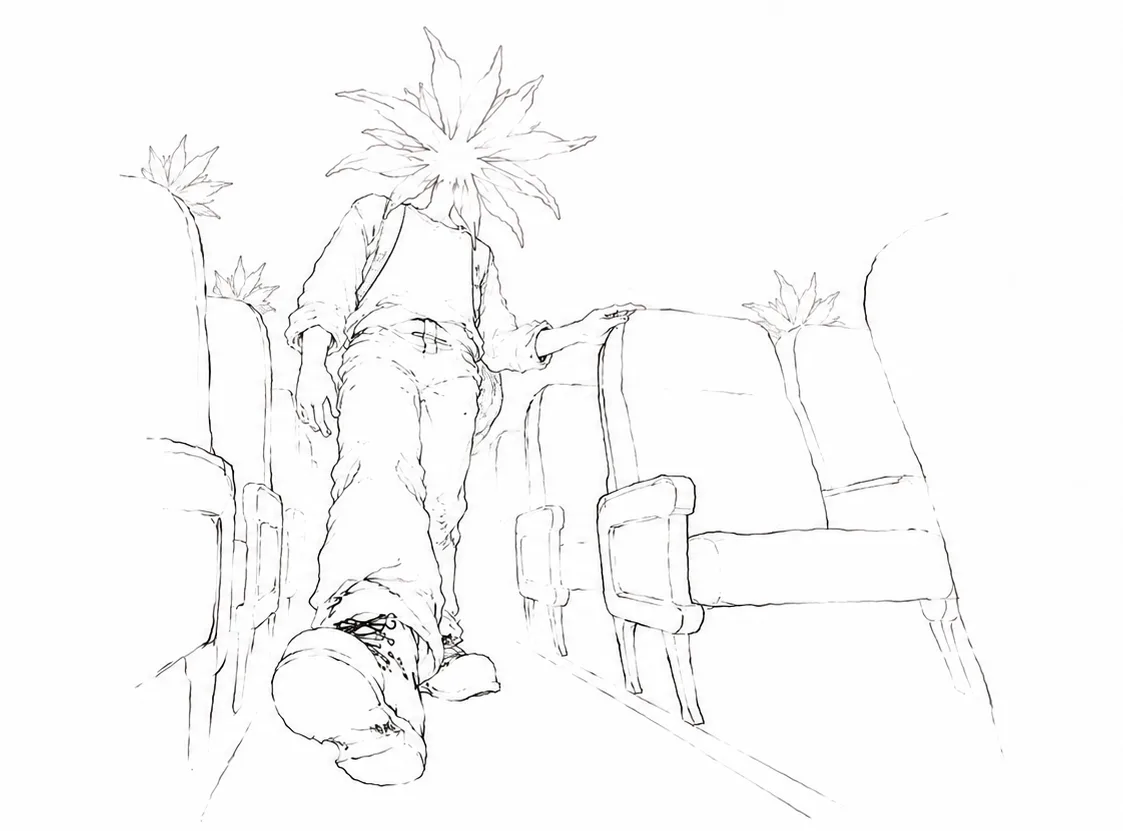
Economy class brings out the opportunist in me. Every flight, I spot ways to get a bit more comfortable, and every flight, two philosophical questions give me pause. The questions are roughly: am I taking advantage of the airline, and am I doing my fellow passengers wrong? Let me walk you through my ponderings (it’s not about armrests).
I don’t like queuing, so I usually end up the last person boarding the plane. Walking down the cramped economy aisle of the plane, looking at an empty emergency seat, one opportunity flashes into my eye: Can’t I just sit on the emergency exit seat with extra legroom, since I am the last and no one apparently reserved it? Usually I don’t do it, then spend the rest of the flight pondering the ethics of this action.
Takes from different philosophical traditions on this:
Overall, engaging in empty emergency exit seat exploitation is ethically defensible, I’d say. The seat stays empty otherwise, and they were never getting my money. This relies heavily on being the last person to board, though. I still wouldn’t call taking the seat virtuous, and I’d only do it on longer flights. I’d be ready to be low status and admit I haven’t reserved the seat when I am asked, but wouldn’t ask for permission.
The second philosophical conundrum starts once seated: Can I recline my seat without asking the person behind me? This one seems easier. My gained comfort comes directly out of someone else’s already very limited space.
Takes from the same philosophical traditions:
I and Thou dominates here. It’s magical how even a brief connection with another human changes how the world feels. You feel better for asking, they feel better for being asked, and usually say yes. Win-win.
So, just ask.
Derek Sive.rs, one of my fav. authors
We had a beautiful panoramic view of Constantinople, cats, and the other café customers. The café owner took the saz, and he and two ladies were singing a song about the soulsearching and desire.
Me: “Did you like it?”
Derek: “I loved it! Nobody is clapping?”
I start clapping, and the rest of the café joins in.
Me: “They probably didn’t want to clap because the lyrics were sad, but Turkish people love bopping to the saddest track.”
Derek: “John Lennon said that’s the definition of rock and roll: sad music that makes you happy. I am in love with how the singer changes her voice in between the notes.”
Middle-aged guy taking pictures of mosques, smiling
Me: “It’s beautiful, isn’t it?”
Him: “I am in love with it. I happened to visit Selimiye uphill and just had to come down here and take pictures. Look, this is my favorite angle of Tahir Efendi Camii.”
Me: “I went to big Selimiye for the night prayer yesterday. I was surprised how empty it was for such a legendary mosque.”
Him: “God will ask not why we built so many mosques here in Istanbul, but why we left them so empty.”
Although my economics brain protested that this means we still built too many mosques, I let my spiritual side take it in. I was just standing there, smiling like he was.
Him: “Do you know Aziz Mahmud Hüdayi and his mosque? There is Sufi dhikr in the mornings. You seem like a good fellow. Join us tomorrow.”
Café worker, after I had a sandwich there
Worker: “My friend, what’s wrong? You seem to be lost in thought.”
Me: “Yeah, I have a lot on my mind right now.”
Worker: “My friend, everything will work out in the end. Here, I’ll bring you some çay.”
Me: “It’s too late for me to drink çay.”
Worker: “You are Turkish! Of course you drink çay!”
He brought me çay, on the house, of course.
Supermarket worker and a Korean guy at the metro station
Me: “Hey, may I ask you, are you from Korea?”
Korean guy: “Yes! Wow!”
Me: “Girls are into K-pop here. You will have a good time.”
Korean guy: “Istanbul people are so nice! Yes!”
The middle-aged supermarket worker to my left:
Supermarket worker: “You speak English well. What country is he from?”
Me: “Korea. They are our old allies. We fought alongside them in a war.”
Supermarket worker: “I don’t even know the country he is from. You seem well educated.”
Me: “I live in Switzerland. English is day-to-day there.”
Supermarket worker: “Is Switzerland cleaner than Istanbul?”
Me: “Yes.”
Supermarket worker: “You see, nephew, Istanbul has become so dirty. There’s no law and order. People will scam you here. I can’t pay my rent. I have to take out a loan. When I pay my rent, there is no money left to eat.”
Me: “Can you say one good thing about Istanbul?”
Supermarket worker: “The only good thing is the view. There is no law and order. All people here are thieves.”
ICU doctor, mid-30s, appreciating the ocean and the boats before I approached him
Me: “What do you think about Turkey’s youth?”
Him: “The young people are smarter. They are watching YouTube documentaries, listening to smart podcasts. There’s an enlightenment.”
Me: “Are you optimistic?”
Him: “Optimistic about Turkey, pessimistic about the Middle East.”
Assyrian wealth manager who sat next to me on the flight back
Me: “Hey, do you want a coffee? I will get you one.”
Him: “No, no, I have to make a big order. I will buy you one! What do you want?”
Me: “Coke Zero.”
Me: “What do you do professionally?”
Him: “I am a Zurich-based wealth manager. I invest with my clients.”
Me: “Would you invest in Gulf countries? They have a data center boom and their regulations are pretty lax.”
Him: “I wouldn’t invest in Gulf countries. I’d invest in Turkey. I look at the people. They are hardworking and persevering. I don’t see that in Gulf countries.”
Side note: It was the first time more people spoke to me in honorific and “abi” terms, am I officially an adult?
There’s something glamorous about how such remarks, which the author themselves seemingly didn’t think much about, stick out from otherwise homogeneous points.
I believe the fact that these sentences haven’t been run through an editing or reasoning chain is what makes them special.
Four C’s for clarity on complex tasks
Here’s a simple framework I use for improving the performance of your fav agent on (semi-)complex tasks:
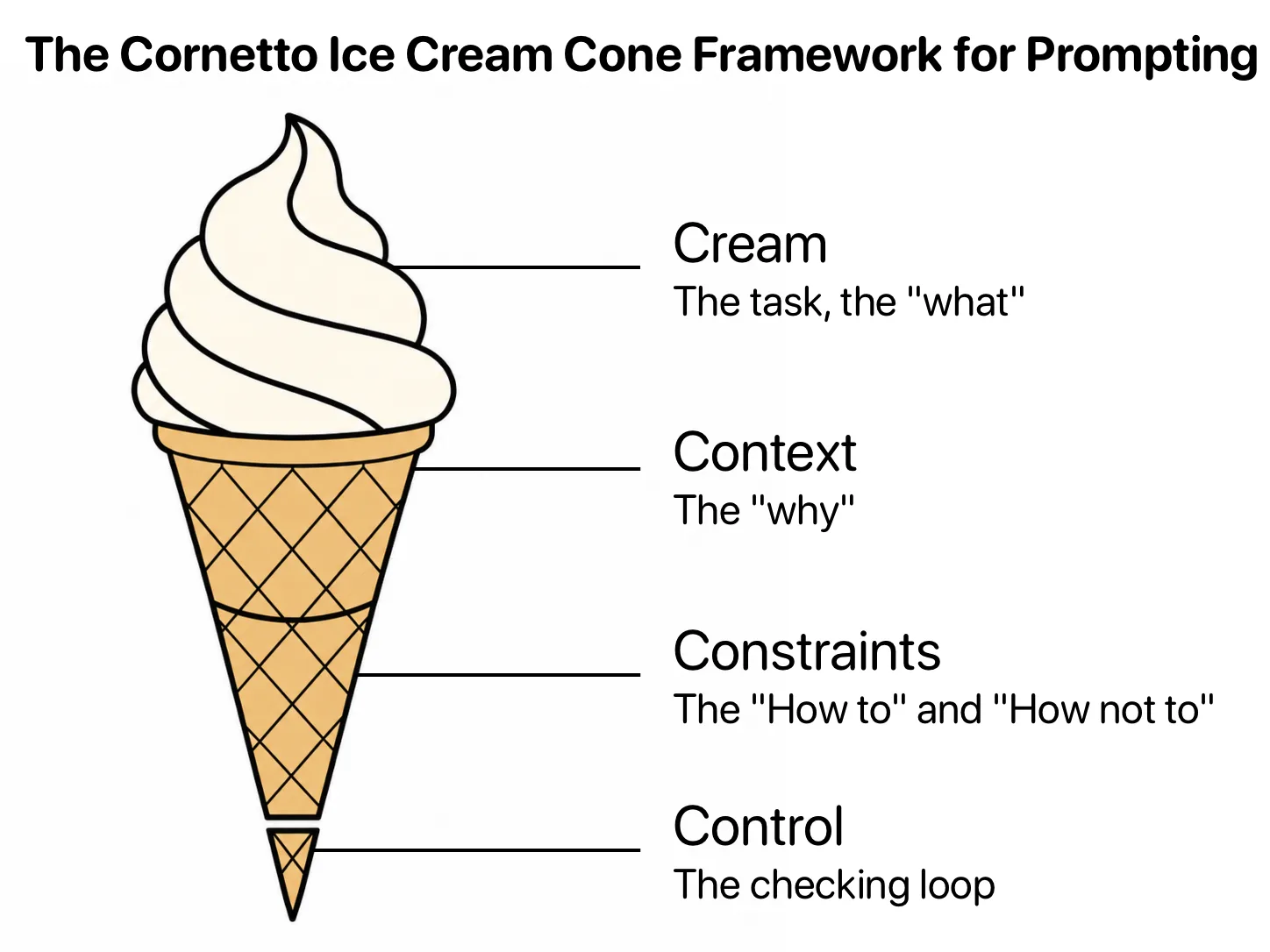
I think it’s all mostly obvious how the four C’s improve your prompt, which means I won’t explain each part of the framework. The only subtle part is the control loop. Designing the control loop to be more “independent” is supremely useful; in practice it means the control loop doesn’t know about the other three C’s. I usually use AI agents with a fresh context window for this. But the independent design principle can materialize in all sorts of things: static tests in programming, a screenshot of the website the agent is working on, or, if you want, a human in the loop.
Maybe, just maybe, you can let the control loop know about some of the constraints.
I never go overboard with my prompts, and I think the framework is simple enough to scale well with model intelligence.
You can also call it the “Four C” framework.
If you think you will forget about this anyway, put something like this in the system prompt:
# ask for these c's for medium to big tasks
Medium to big tasks are tasks that are not one off, aren't a simple question or something like filling out a form or parsing a pdf, it's building something new or synthesizing multiple things. Research doesn't fall under this.

## context
the why

## constraints
the how, and the how not

## control (aka, the loop)
the controlling, importantly, the control doesn't know about the context and constraints, usually subagents or more static control like red-green tests.

Identity is this strange word, it means two opposite things: your identity is that which makes you unique and your identity is that which make you identical, the same as other people [in the group]
during the ecstasy
the lovely
the i-forgot-life-can-be-so-lively lovely

between me and the ecstasy
the lonely
the i-did-not-know-this-about-me lonely

after the ecstasy
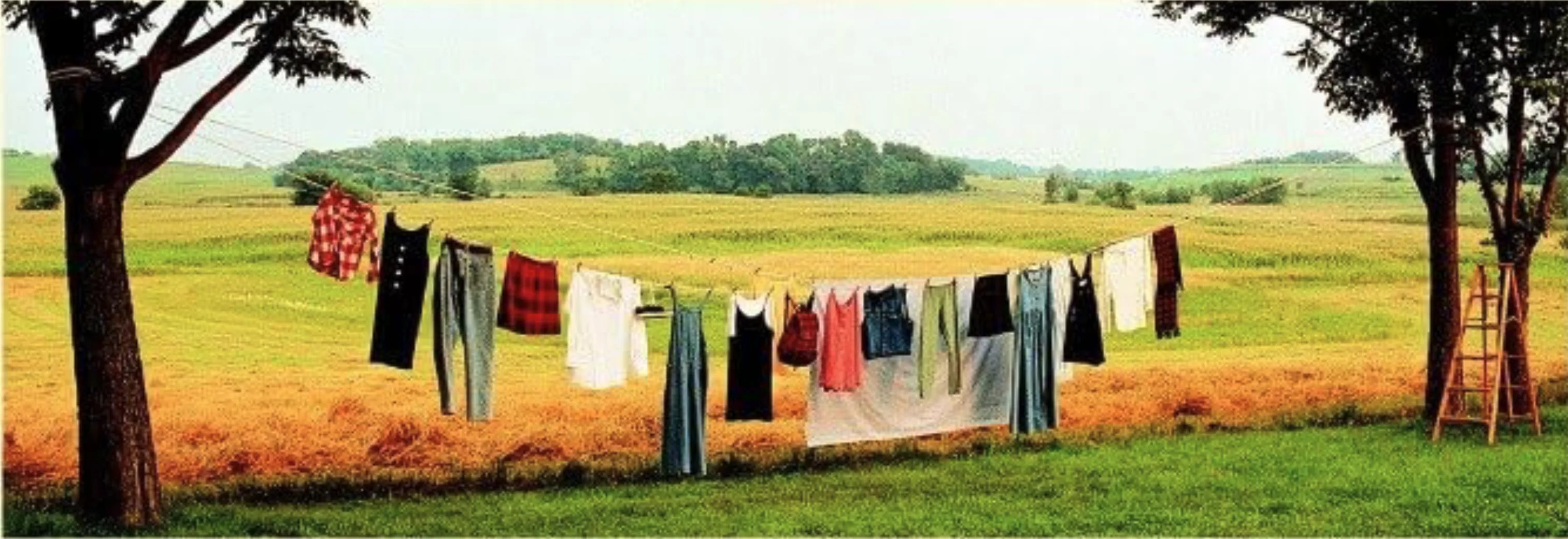
the laundry
sometimes, the dirty laundry
the i-see-it-now-and-i-am-sorry laundry
A counter for overthinking, “it is not that deep” has found a place in our culture. And I kind of like the saying, but as every trendy saying, it gets overused.
I am obsessed with minute details of life, and most of my day I spend in my head. However, I am the opposite of an overthinker. I don’t think about the future at all, for example, it’s not that I am against thinking about the future, It just never occurs to me to think about it.
I am wise enough to not share most of my thoughts, as giving an intro to the minute detail I am thinking about can take many minutes. Whenever I, however seldom, share the microscopic interpretations of things I am thinking about, I often hear “it is not that deep, bro”.
What I love about religion is that it is intention-based: everything is weighed against the intention behind it, rather than only by its consequences. This keeps me happy, as I believe most people are good-natured (and if not, well, they’ll get karma’d for that), it keeps my own intentions in check.
The second thing I love is that its underlying message is absolute, almost tyrannical: everything is under inspection, nothing is above judgement.
In fact, what I love the most, is there is no “it’s not that deep” in religion. In everything that is divine, the true meaning is always one layer deeper.
Some people say I think too much I don’t think they think enough
~ Danny Brown
You get to consciously decide what has meaning and what doesn’t.
~ David Foster Wallace
How you do anything is how you do everything.
~ Unknown
Human resiliency fascinates me. Expats in Europe say the Turkish inflation is not too bad, Istanbul people say it’s really bad. Every person I met worked more than 10 hours per day.
Merchants in the bazaars have gotten arrogant. Nobody is ready to be haggled down from the high prices. They used to cater to German tourists, but now the dynamic has changed to rolling out the carpet for Arab and Russian tourists.
While I was there, two big things happened: Türkiye was eliminated early in the World Cup, and there was a trans pride march. For both, I was surprised that no cab driver gave too many shits about it. Turkish cab drivers remain abnormally funny, though.
Previously, people would’ve flipped out over these topics. Everything seems a little gloomier now. People are more tired, less invested in the workings of the city. Mostly, Istanbul people just want new political leadership.
All in all, Istanbul remains an amazing place. Everything and everyone is worn down, but remains resilient.
Airports are lawless areas. Just slam your beers at 5 a.m., my friend, nobody bats an eye. Also go back to sleep on the floor in a spine-bending position after, we don’t give a fuck.
Marathons have this property as well. I was shocked to see how people deal with liquids during marathons. Another area I remember is university amenities right before a heavy exam. It’s not unusual to see people with a cigarette and coffee in hand who haven’t slept in 30 hours.
There’s something to be said about the mutual understanding of pain and suffering here, and how that enables deep empathy for queer behaviour. Is empathy the antidote to disgust? And therefore, is a well-travelled and well-experienced life the secret to tolerance?
Travellers would say yes, of course, but I am much more inclined to think that humans are only temporarily tolerant of anarchy. Everyone is too compromised to police anyone else in these lawless areas. Until takeoff, then back to bickering and collective complaining.
I am an almost objectivist (the aesthetic kind) when it comes to great art and ideas. What I mean by that is I believe great art is more likely to break through than bad art, and will likely endure longer. I am also an objectivist (the Ayn Rand kind) when it comes to the role of the artist: that the perseverance of the artist guides the perseverance of the art. And most of all, I believe great art is done in small groups, with small audiences.
I love following emerging subcultures on the internet, and I love following their development of an aesthetic and the ideas they rally around. Some of these ideas even get adopted by the mainstream, and inevitably lose nuance during the adoption. Aka the mainstream gets the stupid version of the idea. There are countless examples: effective altruism and charity, therapy and boundary culture, and the worst offender of them all, agile software development.
On one hand, it’s depressing that the ideas we hear are usually a watered-down, stupid version. On the other hand, it’s invigorating that maybe we can dig a little deeper, that mainstream ideas are deeply underrated because there’s almost always a smarter insight, a greater artist behind it.
At 30 years old, I am saddened that I beat all of my computer science students when it comes to AI workflows. On X (formerly known as twitter), much younger people beat me, and I am aroused and inspired by that.
The world of computer science and math got way more rough for young graduates. Therefore, each lecture I start with a little speech about how doomed they are if they don’t adopt AI as fast as they can. Here are the 6 (7) rules I teach them to prosper in this age:
They are contradictory and self-referential by nature.
Here is the secret seventh rule:
I have a British lad in my head going “bit bittersweet, innit?” on all these things.

humans are really not built for first principles analytical thinking. even smart people find it incredibly exhausting. what we consider analysis is usually anxious panicking and avoiding something or the other. it is clear we are going to be massively outclassed in this soon
AKA. “analytical thinking is the differentiator” is just as outdated as “taste is the differentiator”
What I love about LLMs is that they do a bulk -> cut process of thinking naturally, they research and reason -- a lot -- and then cut down the logic chain. If I had the stamina, that’d be my modus operandi on every question.
Also, try out the best LLMs, people, pay for the 100 USD sub, they really are better.
first of all, what you say AI will never be able to do it can do right now if you’d pay for the subscription dumbass